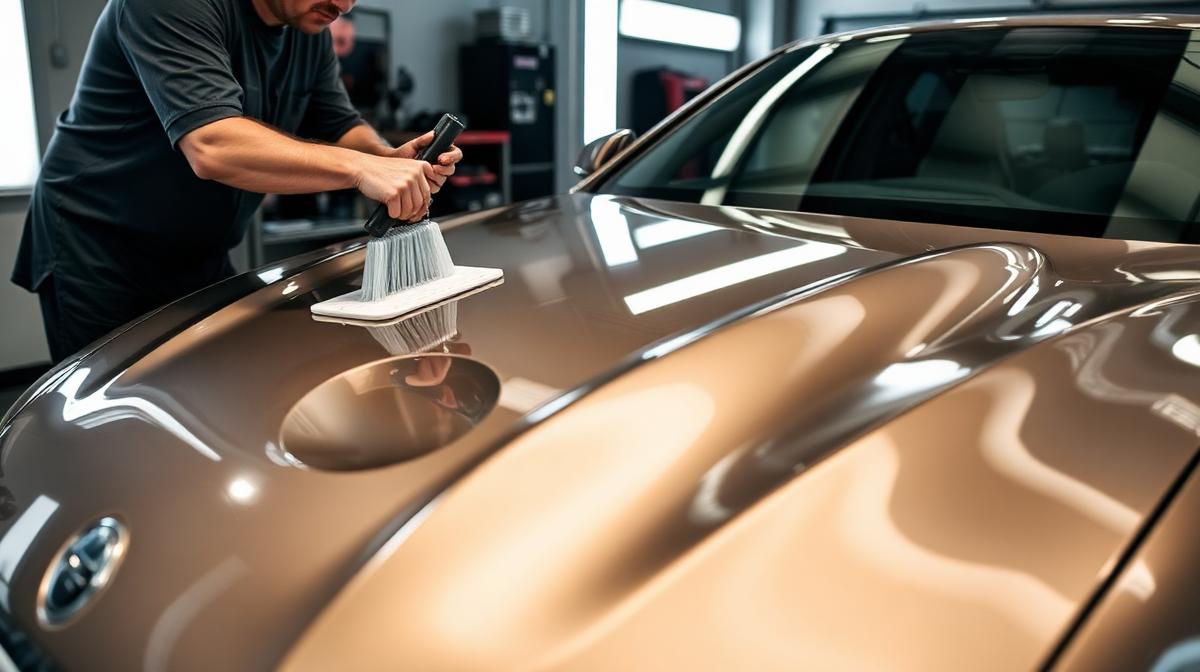
How to Sell Ceramic Coating: A Business Guide for Detailers
Most detailers who offer ceramic coating are not making the money the service should generate. They charge too little because they are not sure what the market will bear. They struggle to explain the value because they are trying to sell a product rather than an outcome. And they lose jobs to cheaper competitors because they have not built the kind of reputation that makes price secondary to trust.
Ceramic coating is the service that, priced and sold correctly, changes the entire financial shape of a detailing business. A single coating job can bring in as much revenue as four or five standard details in the same timeframe. The client it produces tends to refer others, return for maintenance, and post results publicly. And unlike a wash or a basic detail, a coating job demonstrates a level of expertise that positions your business in a completely different bracket from the van down the road charging $80 for a full valet.
This guide is not about the technical application process — it is about the business side. How to price coating jobs properly. How to have the conversation that converts enquiries into bookings. How to manage the operational details that turn a one-time job into a long-term client relationship.
Why Ceramic Coating Is Worth Building Your Business Around
The premium detailing market is growing. Vehicle owners who care about their cars — enthusiasts, luxury owners, people who have spent significant money on a new vehicle — are increasingly aware of ceramic coating and actively looking for professionals to apply it. The demand is real, the clients are higher quality on average, and the willingness to pay is substantially higher than the standard detailing market.
Repeat business from coating clients is also underestimated. A client who has had a coating applied will return every six to twelve months for a maintenance service or top-up treatment. They will refer friends who ask who did their car. They will post results on social media and tag your business if you have done the job well. A single coating client, over two years, can be worth three to five times the value of the initial job if you manage the relationship properly.
The barrier to entry for competitors is also higher than for standard detailing. Equipment, product knowledge, application skills, and a reputation for quality are all required. That barrier protects your margin in a way that commodity services simply cannot.
How to Price Ceramic Coating Jobs Properly
Ceramic coating pricing should not be benchmarked against what other detailers in your area charge. It should be built from your costs upward, with a margin that reflects the expertise required and the value delivered to the client.
Your cost floor includes the coating product itself — professional-grade coatings from reputable brands typically cost between $80 and $300 for the product alone. Add consumables: applicators, IPA prep solution, panel wipes, gloves. Add the time for the paint preparation that has to happen before any coating goes on — decontamination, clay, and often a stage of paint correction. Factor in your hourly rate across the full job time, including the curing wait where you are on-site but not actively working. Factor overhead proportionally.
The result is a cost floor well above what most detailers expect. A coating job that takes one and a half days of real work, uses $150 in product, and requires specific equipment has a cost base of $350–$500 before you have paid yourself anything meaningful. Price below that and you are losing money or working for less than minimum wage. Price above it — appropriately above it — and you have a service that makes financial sense.
Market ranges give you context, not permission. Consumer-grade coatings: $350–$600. Professional-grade one-to-two year coatings: $600–$1,000. Professional-grade five-to-ten year coatings: $1,000–$2,500 and above, depending on vehicle size, condition, and preparation required. For a thorough breakdown of how to build a pricing structure across your services, our detailing pricing guide covers the full method.
The Conversation That Sells the Job
The most common reason detailers lose ceramic coating enquiries is that they try to sell a product instead of an outcome. A client who asks about ceramic coating often does not know what it is. They have heard the term, seen it mentioned online, and are asking because they want their car to look good and stay looking good with less effort. That is what you are selling — not a coating product.
The conversation that works goes something like this: "A ceramic coating bonds chemically to your paint and creates a layer that protects against UV, water spots, bird droppings, and light contamination. Once it is on properly, your car is significantly easier to wash and maintain, and the protection lasts years rather than months. The difference between what you would spend on regular waxing and what a coating costs is much smaller than most people think when you look at it over three or four years."
Framing it over time changes the maths in the client's mind. A $900 coating over five years is $180 a year, or $15 a month. A wax every three months at $60 is $240 a year. When the client sees it that way, the coating is not expensive — it is the more rational choice.
What you do not want to do is use technical language, compare product brands, or turn the conversation into an education session the client did not ask for. Answer their real question — "will this be worth it for me?" — and answer it simply and directly.
Quoting, Deposits, and Booking the Job
Every ceramic coating enquiry should result in a written quote before any booking is confirmed. This protects you, sets the client's expectations clearly, and signals professionalism. A written quote that specifies the service, the price, the prep work included, and the warranty terms is the foundation of a dispute-free job.
Include a vehicle condition assessment clause in your quotes. Coating jobs that require more paint correction than expected should be flagged at inspection — before work starts, not after. If you quote a coating job flat and then discover the paint needs two stages of correction, you have two bad options: absorb the extra time or have an uncomfortable conversation after the fact. A quote that acknowledges condition-dependent pricing avoids both.
Take a deposit at booking. Coating jobs require product pre-purchase and block out a significant portion of your calendar. A 25–30% deposit is industry standard and reasonable — it confirms the client is committed and covers your product cost if they cancel. State your cancellation policy in the booking confirmation and send it in writing.
Managing Warranties and Follow-Ups
A warranty on a coating job is a marketing asset as much as it is a service commitment. A client who receives a written warranty with their completed job feels they have bought something with lasting value. A client who brings their car back for a warranty claim — handled professionally — often becomes one of your most loyal and vocal advocates.
The operational challenge is tracking warranty expiry dates across your client base. If you do not have a system that stores this information and alerts you or the client when service is due, warranties become a liability rather than an asset — clients who try to claim discover you have no record, and the trust damage is significant.
Build your follow-up schedule into the booking process. At six months: a check-in message and maintenance service offer. At twelve months: a maintenance coating recommendation. At three months before expiry: a proactive message about renewal options. Done systematically, this turns a one-time coating client into a multi-year revenue relationship. ProDetailer lets you attach notes, service history, and follow-up dates to each client and vehicle record so nothing falls through the cracks.
Photography That Does the Selling for You
Ceramic coating produces some of the most visually compelling before/after results in the detailing industry. A car with heavy swirling, water spotting, and dull paint transformed by proper prep and a fresh coating applied correctly — that result markets itself if you capture it properly.
Photograph every coating job. Before: full-car shots in natural light, close-ups of paint defects, overhead shots showing swirl patterns under direct light. After: the same angles, same lighting conditions, showing the transformation. The contrast does the persuading — you rarely need to write much copy alongside it.
Post the results on Instagram and your Google Business Profile. Share them in local car enthusiast Facebook groups when the context is appropriate. Keep the best examples in a dedicated album you can share with enquiring clients when they want to see your work. Over time, this library becomes one of your most effective sales tools — concrete visual evidence of what your coating jobs actually look like.
Building a Reputation in the Premium Segment
The premium detailing market operates largely on referral and reputation. Enthusiasts talk to other enthusiasts. A coating job that impresses someone in a local car club typically results in multiple enquiries from the same group. One high-profile vehicle — the kind that gets attention at shows or meets — can generate more enquiries than months of social media posting if the result is genuinely exceptional and the owner is happy to tell people where their car was done.
Google reviews on coating jobs carry particular weight because they tend to be detailed and specific. A client who has spent $1,200 on a coating and is delighted with the result is far more likely to write a thoughtful, descriptive review than someone who paid $80 for a wash. Those reviews signal expertise and trustworthiness to every potential client who sees them.
Ask for the review at the right moment — when the client sees the finished result and their reaction tells you they are pleased. That window, when the emotion is high and the visual impact is fresh, is when asking is most natural and most effective. Send a direct link to your Google review page in the follow-up message that same day.
Tracking Ceramic Jobs in Your Business
Coating jobs should be tracked separately from your standard services so you can measure their impact clearly. Know your average revenue per coating job. Know your product cost per job. Know how many coating jobs you are doing per month and what percentage of your total revenue they represent. This data tells you where to focus your marketing and whether your premium pricing is working.
Track warranty expiry dates for every coating client. Track their vehicle details so you know the make, model, and condition from the previous visit when they enquire again. Track the follow-up dates you have committed to so the six-month check-in actually happens. Without this information in a system, it lives in your head and eventually gets dropped.
Ceramic coating is not just a service — it is a business model if you run it with the same rigour you bring to the application. Price it right, sell it confidently, deliver the result, and manage the relationship after the job is done. The clients it produces are the ones who make a detailing business genuinely worth building.
Citește mai departe
Auto Detailing Pricing Guide: How Much to Charge in 2026
A practical pricing framework for detailers — how to set rates that cover materials, labor, and still leave real profit per job.
Citește articolul
Best Auto Detailing Software in 2026: What to Look For
Booking, invoicing, CRM, profit tracking — what actually matters when picking software for a detailing shop in 2026.
Citește articolul
How to Start a Mobile Detailing Business in 30 Days
A realistic 30-day plan to launch a mobile detailing business — kit, pricing, first clients, and what to skip.
Citește articolul